On this page
What the installer does on siteA site checklist you can useEPRA licences in plain wordsWhat a good quote listsWhat it costsHow long it takesHow we helpKenyan sellers list pumps and kits without installation, and no installer has published a rate card to us, so we cannot quote a labour price. What we can tell you is what the quote must contain and which EPRA licence to ask for: T1, T2 or T3 for technicians, C1 for contractors.
What the installer does on site
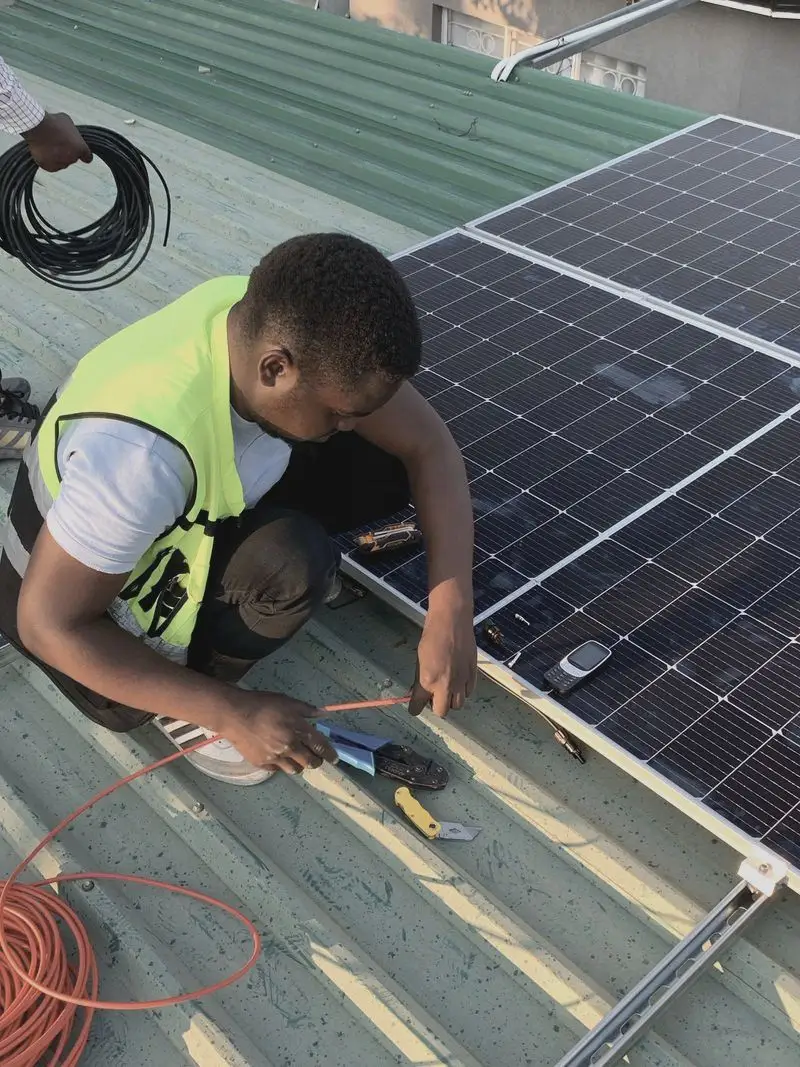
Installation is more than bolting panels to a frame. A competent installer:
- Surveys the site. Checks the borehole or water source, the tank position and the shade-free spot for the panels.
- Confirms the sizing. Compares your daily water and total lift with the pump curve. See the sizing calculator for a first estimate.
- Fits the pump and cable. Lowers the pump at the depth the driller recommends and joins the cable with a waterproof joint. A submersible cable of the right section avoids voltage loss.
- Lays the delivery pipe. HDPE pipe to the tank or the field, with the right pressure class.
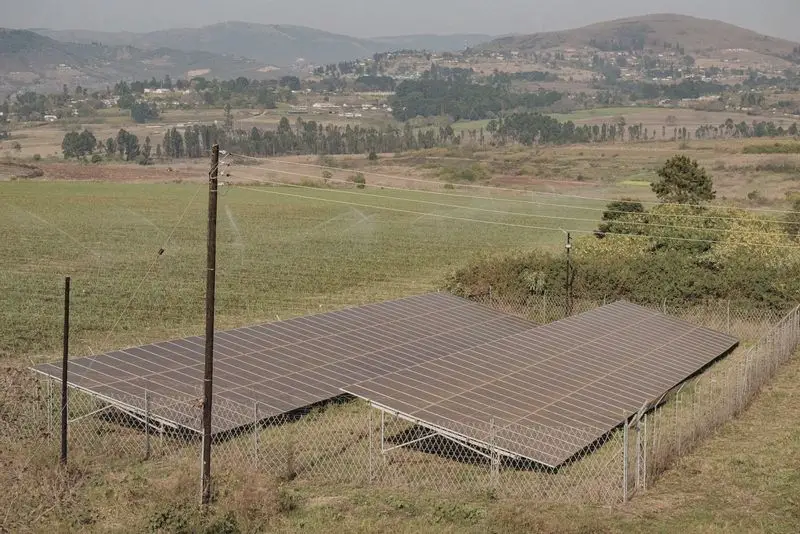
- Mounts the panels. On a fixed frame, tilted towards the equator, secured against theft.
- Wires and earths the system. Earthing and lightning protection are part of the job, not an extra.
- Fits protection. A level probe or float switch to stop the pump running dry or overfilling the tank.
- Commissions and hands over. Test-pumps, shows you the controller, and gives you the paperwork.
A site checklist you can use
Before the installer leaves, check each line:
- The panels are bolted or welded to a frame, not just leaning.
- All cable joins are sealed and the cable is clipped or buried, not lying in the sun.
- The pump controller is the model the pump maker specifies.
- Earthing is done, and you can see where.
- A float or level protection is fitted.
- The pipe is secured at bends and at the tank inlet.
- You have seen the pump deliver water at the tank.
- You have the warranty terms, the serial numbers and a phone contact in writing.
EPRA licences in plain words
EPRA, the Energy and Petroleum Regulatory Authority, licenses solar work under the Energy (Solar Photovoltaic Systems) Regulations 2012 (or any replacement). In summary, as we read the regulation and EPRA’s June 2026 notice:
| Licence | Who | What it covers |
|---|---|---|
| T1 | Technician | Small systems, up to 100 Wp |
| T2 | Technician | Medium systems, may include an inverter |
| T3 | Technician | Advanced systems, including grid-connected and hybrid |
| C1 | Contractor | Design and installation, and the contractor must have a T3 technician available |
| V1 | Vendor | Design, sale, distribution and installation, with a T2 technician on staff |
The June 2026 notice says technicians who install, test, maintain or repair solar PV systems must hold a T1, T2 or T3 licence. We read the class descriptions in summaries of the regulation and have not been able to open the full regulation text, so the capacity limits above may have been revised. We also could not confirm whether EPRA treats a solar pump with no battery as a PV system for licensing. In practice, a pump powered by panels of several hundred watts is a job for a licensed technician.
Licence classes and fees can change. Check the current EPRA notice before you rely on a class.
What a good quote lists
A quote you can compare has these lines:
- Pump brand, model, power and maximum head.
- Controller brand and model.
- Panel brand, watts and number.
- Cable section and length. Pipe diameter, pressure class and length.
- Frame and anti-theft measures.
- Tank, if included, with its size.
- Labour, separate from parts, and any transport charge outside Nairobi.
- The installer’s name, EPRA licence class and number.
- What the warranty covers and for how long.
- The payment schedule.
If a quote only says “solar pump system, one lump sum”, ask for the list.
What it costs
Parts: see the dated prices on the borehole pump page, surface pumps and pump kits. For labour, no installer has given us a price list, so we show none. The only installed prices we found are for drip systems: Grekkon lists KSh 33,000 for a quarter-acre drip kit and KSh 135,000 for a one-acre kit, both installed (seen 28 Nov 2026). They show the order of magnitude for irrigation work, not for a pump. See drip irrigation.
How long it takes
No source gives a standard duration, and we do not guess. A good installer gives you dates for the survey, the delivery and the handover in the quote.
How we help
We pass your request to one EPRA-licensed installer and tell you who before sharing your details. We do not install and we do not take payment for the work. Read how it works, then see borehole solarization for the full job, and paying safely with M-Pesa before you send any money. To check a licence, use the EPRA licence check.