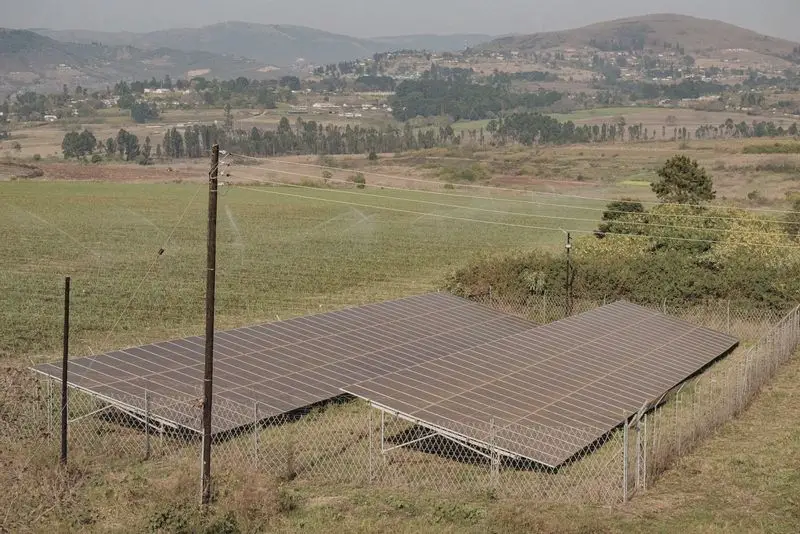
Check the sun and the panels first, then the controller switch and lights, the water level (the dry-run sensor stops the pump when the water drops), the full-tank float, the pipes, the cables and the controller's heat. Do not open the controller or touch panel wiring: the panels make electricity whenever there is light.
You switch on, or walk to the pump, and nothing happens: no sound, or a motor running and no water in the tank. Before you call anyone, nine checks will often tell you the cause. They come from the manuals of Lorentz and Grundfos, which sell pumps in Kenya. Your pump may be another brand (Dayliff, SunCulture, Solarpex, Premier), but the logic is the same. If the problem is a code on the controller, go to our list of controller error codes. If you need a technician, see solar pump repair. The sizing calculator helps if the pump is simply too small for your lift, and the controllers category lists replacements. More help is on the guides page.
Safety first. Panels make electricity whenever there is light, even when the pump is off. Lorentz warns that the array supplies DC voltage to the controller even when the pump is not running. All nine checks below are things you look at or press. Do not open the controller, do not touch panel cables, do not pull the pump out of the borehole.
The nine checks
1. Is there enough sun right now?
Early morning, late afternoon and passing clouds can leave too little power. Lorentz calls this “low power”: the controller waits and tries again every 2 minutes. Grundfos describes a flashing green light on the CU 200 when there is enough power to light the display but not enough to start the pump. If both lights on a Grundfos CU 200 are off, the system lacks the power even for the display. Come back at midday before you decide anything is broken.
2. Are the panels shaded, dirty or damaged?
Walk around them. Grundfos tells you to check that the modules are intact and that trees, grass, bushes or buildings do not shade them. Lorentz lists shaded, dirty, wrongly wired, misplaced or undersized panels as causes of low power. Cut back grass and branches. Clean the glass with clean water and a soft brush or cloth, no soap, no sand in the water (Grundfos). Tell the technician about any cracked panel or loose frame.
3. Is the controller switched on?
Many controllers have an on/off button that stops the pump, not the controller. On the Grundfos CU 200 a green light on the button means the system is on and a red light means it has been switched off: press the button to start. On Lorentz controllers, switching off and on again restarts the pump if it is waiting to retry. Someone may have switched it off to save the pump and forgotten.
4. What do the lights say?
Write down the colours and whether they flash or stay on. Lights are the first clue, and a technician can use them by phone. On the Grundfos CU 200:
| Light or code | What the manual says |
|---|---|
| Green running light | Pump is running above 500 rpm |
| Yellow light | Water reservoir is full |
| Red fault light, with “dry running” mark | Lack of water |
| Display shows F1, F2, F3 or F4 | Overvoltage, overtemperature, no contact to the pump, overload |
Lorentz controllers use their own patterns, which our error codes guide explains.
5. Is there water at the pump?
Dry-run protection exists because a pump running without water can be destroyed. Davis & Shirtliff’s warranty terms list pumps run dry among the exclusions. Grundfos says the water must be at least 3 ft (about 0.9 m) above the pump and the dry-running sensor must be under water. If the borehole has dropped, the controller stops the pump on purpose. Lorentz says that with its dry-run accessory fitted, the pump restarts automatically 15 minutes after the water rises above the sensor. If the water level is low every time you pump, the pump is drawing the borehole down faster than it refills: lower the daily pumping, ask for a yield test, and do not simply restart it.
6. Is the tank full?
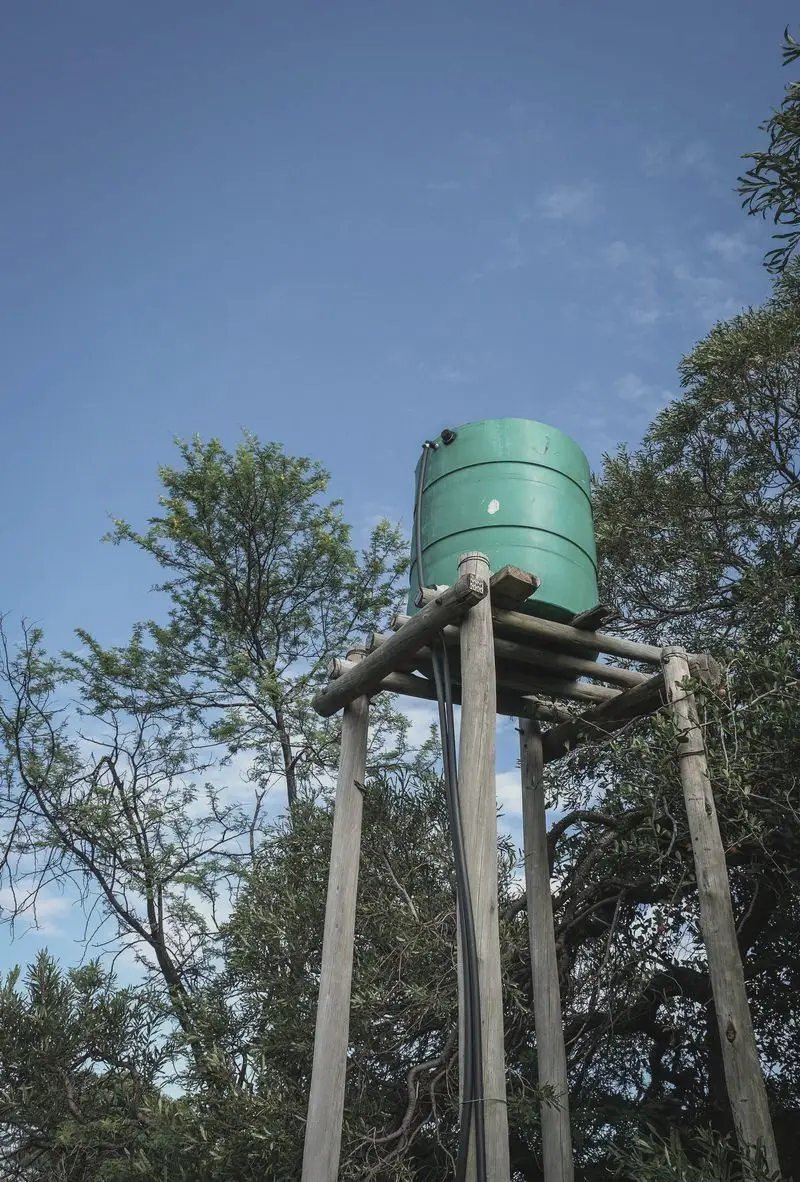
A full tank stops the pump on purpose, with a float switch. On the Grundfos CU 200 a yellow light shows a full reservoir. Lorentz describes a tank-full switch that restarts the pump when the tank is no longer full, and says to confirm that the tank really is full and the switch is fitted correctly. Go and look at the tank. If it is half empty but the pump thinks it is full, the float may be stuck, dirty or have a damaged cable: Grundfos lists a dirty or defective level switch as a cause of a pump that does not stop, or does not start, with the reservoir in the wrong state. Float switches are cheap parts, see the float switches category.
7. Are the pipes blocked, kinked or leaking?
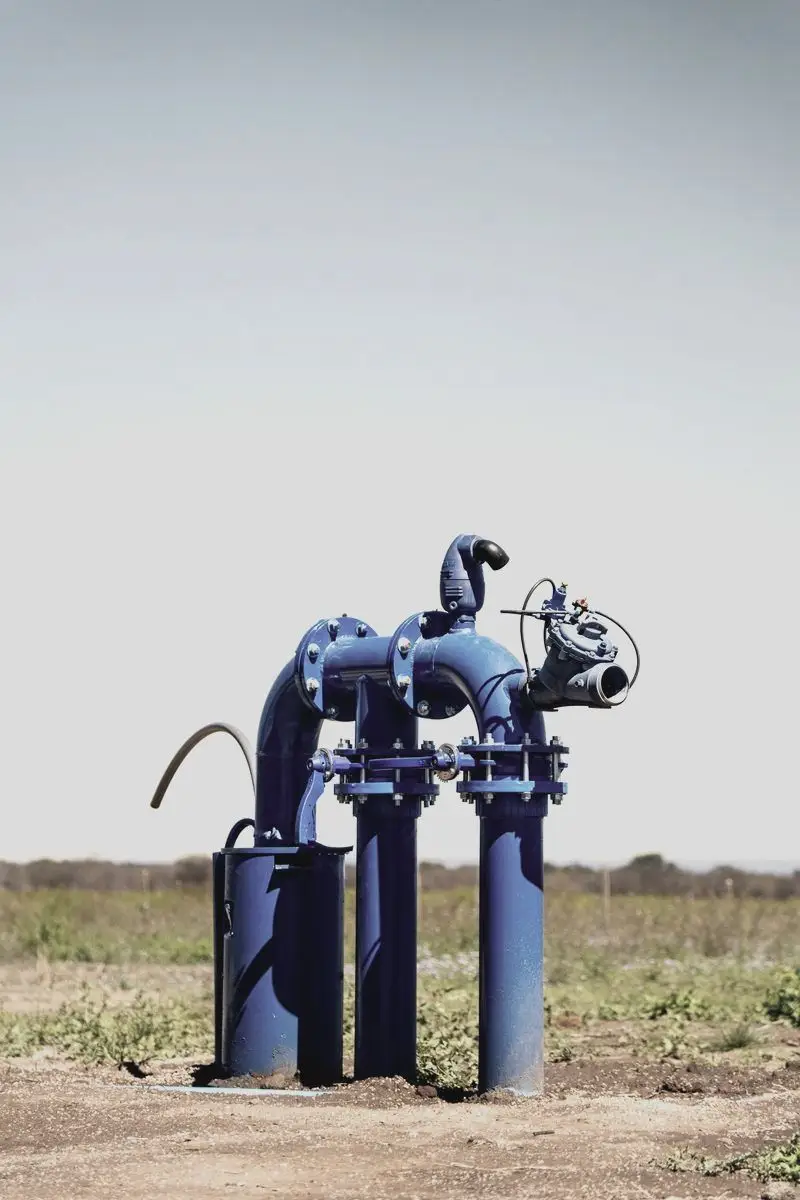
Walk the line from the borehole to the tank. Lorentz asks you to check the whole pipe or hose for blockages or kinks, and Grundfos lists hoses and pipes in its visual inspection. A closed valve, a collapsed flexible hose or a burst joint can make a pump run with little or no water arriving. Look for a wet patch along the pipe. If a centrifugal pump runs but delivers nothing, Grundfos says to check that the riser pipe is not blocked.
8. Do the cables and plugs look intact?
Look, do not touch. Grundfos includes cables in its visual inspection. Lorentz lists a damaged motor cable, and dirty or wet plugs, as the cause of a “motor cable problem” code, and says to clean and dry plugs before reconnecting power. On the Grundfos CU 200, code F3 means no contact to the pump: pump cable, connections or the pump itself. A chewed cable (rats, termites), a burnt plug or a cable pulled out of its clip is worth a photo for the technician.
9. Is the controller too hot?
Lorentz says a controller that is too hot reduces the pump’s speed or stops it, and the pump resumes once the controller cools. It advises moving the controller out of direct sun, and says overheating is normally due to insufficient ventilation. Check that the controller sits in shade with space around it, that no nest or dust blocks the vents and that nothing is stacked against it. Grundfos lists overtemperature as F2, but that code concerns water temperature at the motor, so do not mix the two up.
What you should not try
- Do not open the controller or the junction box.
- Do not pull the pump out of the borehole yourself.
- Do not bridge a float or dry-run sensor with a wire to make the pump run: that removes the protection that stops damage.
- Do not let someone else repair it if it is under warranty: Davis & Shirtliff’s terms say that any repair attempted by another party invalidates all its warranties.
When to call a technician
Call if you see any of these after the nine checks:
- The controller has no lights even at midday with clean, unshaded panels.
- The controller shows a pump overload, a motor cable or short-circuit code, or F3 or F4 on a Grundfos CU 200. Lorentz says an overload may need a pump inspection, and that a motor cable code needs the cable inspected.
- The pump runs but you are sure the water level is fine and no water arrives.
- A panel is cracked or a cable is burnt or chewed.
Technicians measure the panel voltage under full sun and compare it to the controller’s range. For example, Lorentz publishes, for a PS2-600 controller, a minimum of 68 V DC (at maximum power point) for full speed and a maximum of 150 V DC. That is work for someone trained, with a meter. Have the brand, the model and your notes ready. If you want help, ask for a site visit through us: we pass your request to one EPRA-licensed installer and tell you who before sharing your details. You can also read how to check an installer’s EPRA licence.
Pumps that fit
Sources
- Grundfos, Service instructions: SQFlex water supply systems (CU 200 lights and fault codes, trouble-shooting, maintenance)
- Lorentz, S1 controller help: troubleshooting overview (low power, pump overload, dry-run and tank switches, controller temperature)
- Lorentz, required solar power input and low power
- Lorentz PS2, troubleshooting on-site (Lorentz Australia distributor guide: power check, pump-off reasons)
- Davis & Shirtliff, terms of warranty (1 March 2026)